


Are You Unsure Which Test You Need?
Methylation Vitamin Blood Test Including Nurse Service To Your Home for UK Patients
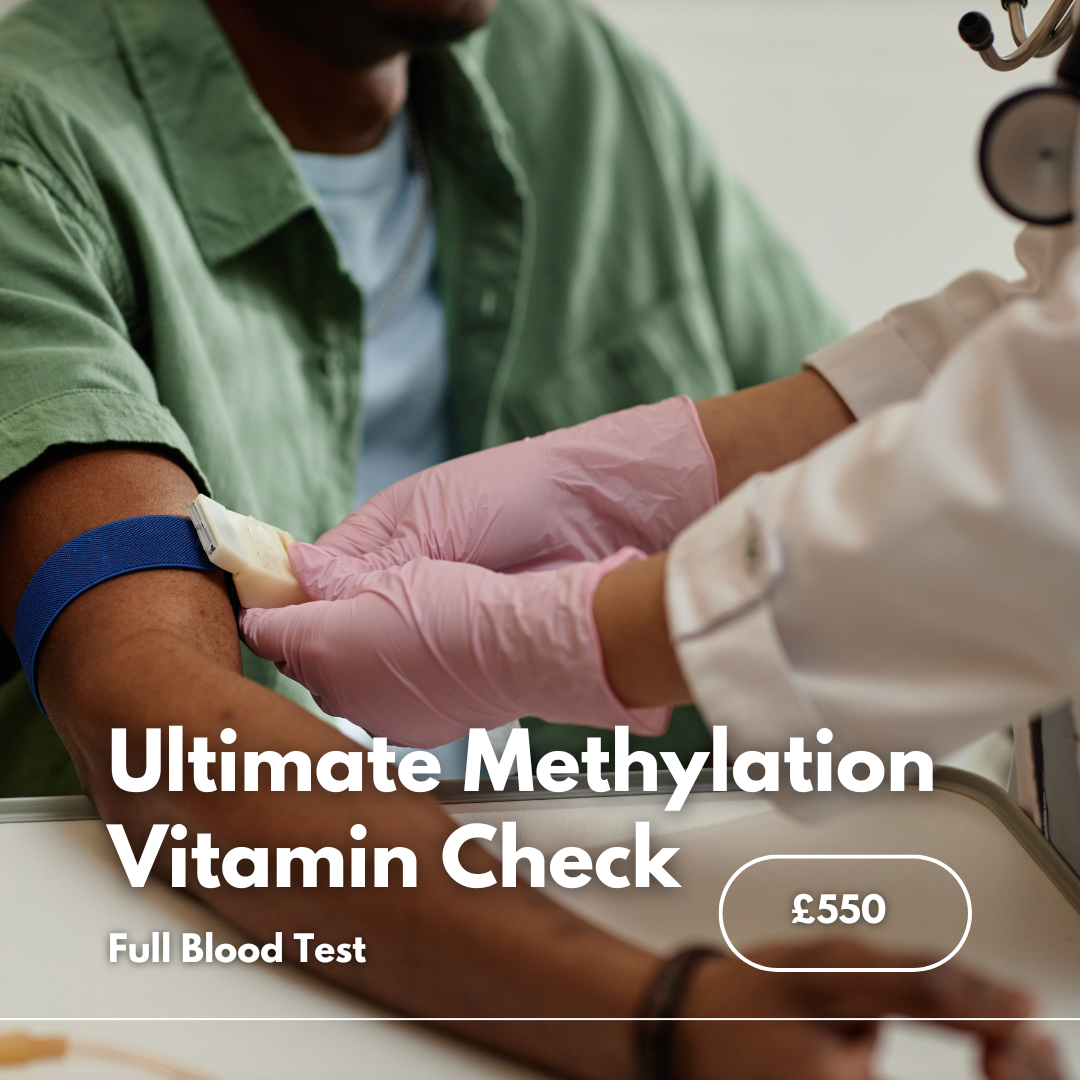

Methylation Vitamin Blood Test Including Nurse Service To Your Home for UK Patients
Support your energy, immunity, and overall health with the Methylation Vitamin Blood Test. This advanced private full blood test assesses key vitamins and minerals, helping to identify nutrient imbalances that may affect metabolism, cognitive function, and immune resilience. Includes an at-home nurse visit for UK patients and a detailed lab report to provide personalised health insights.
✅ Measures Vitamins A, B9 (Folate), B12, C, D, E, Magnesium, Iron & more
✅ Supports energy levels, immune function & nutrient balance
THIS TEST CAN NOT BE SHIPPED OUTSIDE UK.
Please note this is a home blood test to check current vitamin, nutrient, mineral, blood fat and sugar levels. It is not a DNA Test. For our methylation DNA Test click HERE
You will be asked to fill out a patient form at checkout which will give us more information on your symptoms, current medications and supplement intake.
Lab Test Results Only - no support = £550
Lab Test Results & Personalised Written Report with Supplement List = £570
Lab Test Results & 30 Minute Zoom Call = £590
Lab Test Results & 30 Minute Zoom Call & Personalised Written Report with Supplement List = £610
Methylation Vitamin Blood Test UK - Comprehensive home blood test kit which includes nutrient and Lipid Screening with At-Home Nurse Service
The Methylation Vitamin Blood Test is a comprehensive vitamin and mineral blood test that measures over 26 markers across six clinical categories: essential vitamins, minerals, fatty acid balance, lipid profile, blood sugars and iron status. This venous blood test covers vitamins A, B9 (Folate), B12, C, D and E alongside magnesium, calcium, phosphorus & a full iron panel, omega-3 and omega-6 fatty acids, cholesterol breakdown and HbA1c. The test is available to UK patients aged 18 and over and includes an at-home nurse visit — a qualified phlebotomist contacts you within three working days of ordering to arrange a convenient morning appointment at your home, with results returned in 10 working days.
This general health blood test is designed for anyone who wants a detailed picture of their current nutrient status, whether prompted by specific concerns or a general desire to optimise their health. It is particularly useful for investigating persistent fatigue, low energy, brain fog or poor immunity, as deficiencies in B12, folate, iron and vitamin D are among the most common - and most frequently overlooked - contributors to these symptoms. The lipid markers add a cardiovascular and metabolic dimension that standard vitamin panels rarely include, making this a practical health MOT blood test in a single draw. If you have already completed or are planning a methylation DNA test, we can review both sets of results together to provide a fully personalised supplement protocol based on your genetics and your current circulating levels.
FAQs
Q. How do you support me with my results?
In ADDITION to your lab report we provide support options including a follow-up personalised written report or a 30 minute video call to explain your results fully. Reports / calls highlight dietary and lifestyle advice plus links to supplement protocols, specific doses, and any further testing requirements. We use the patient information you provide us at checkout along with your results to compile personalised action points for you.
If you have previously had or just ordered a methylation DNA test then you can ask us to review both results together so you get the most accurate protocol for your current health.
Q. What markers are tested?
- Vitamins: A (ß-Carotene), B9 (Folate), B12 (Total), C, D (25-OH), E (Total)
- Nutrients: Magnesium (Red Cell), Iron, Phosphorus, Calcium, Omega 6, Omega 3, Monounsaturated Fatty Acids
- Blood Sugars: HbA1c (Glycated Haemoglobin)
- Bone Panel: Corrected Calcium, Albumin
- Lipid & Fats: Trans Fatty Acids, Saturated Fatty Acids, Triglycerides, Total Cholesterol, LDL Cholesterol, Non-HDL Cholesterol, HDL Cholesterol, Total Cholesterol to HDL ratio
- Iron Status: Total iron-binding capacity (TIBC), Transferrin Saturation, Ferritin, Transferrin
Q. What is Micronutrient testing?
A micronutrient assay test provides an individual with a comprehensive look at their nutritional status. Measuring the levels of vitamins and minerals in the body can reveal deficiencies that may be causing symptoms of ill health.
This venous blood test (blood drawn from a vein in the arm) is carried out in your own home (anywhere in mainland UK) by a qualified nurse at a time to suit you. You then use the freepost envelope to send your sample back to the laboratory - results available in 10 working days.
Once ordered, you will receive your test tube kit via Royal Mail in 2-3 days. Our nurse service will use the telephone number you provide to contact you to arrange a mutually convenient time to come to your home to take your sample - we recommend arranging a morning sample Mon-Thurs. A free post envelope is included with your kit so when the nurse has taken your sample, simply pop it straight in a post box.
Q. Should I fast before this test?
If you require the most accurate triglyceride or LDL cholesterol levels, then we do recommend fasting for 12 hours or overnight prior to the test in the morning. Stay well hydrated before your test (water only). Take your sample at least 24 hours after any vitamin or mineral supplements.
Q. Who should consider this vitamin and mineral blood test?
The test is designed for adults aged 18 and over who want a thorough picture of their current nutritional status. It is particularly relevant if you are experiencing any of the following:
- Persistent fatigue, low energy or feeling run down despite adequate sleep
- Brain fog, poor concentration or difficulty with memory
- Frequent infections or a sense that your immune system is underperforming
- Suspected iron deficiency or anaemia symptoms such as breathlessness, pallor or dizziness
- Concerns about vitamin D levels, particularly during winter months or if you have limited sun exposure
- Numbness, tingling or neurological symptoms that may indicate B12 deficiency
- A desire to check cholesterol, triglycerides and blood sugar alongside nutrient levels in a single test
- A plant-based, vegan or restrictive diet where certain deficiencies are more common
- An existing methylation DNA test result that you want interpreted alongside current blood levels
Q. How does this test compare to a standard GP or NHS vitamin blood test?
A GP will typically test individual markers in response to specific symptoms — for example, checking B12 if you report fatigue, or vitamin D if you have bone pain. The Methylation Vitamin Blood Test covers all of these markers in a single panel alongside a full lipid profile, HbA1c, fatty acid balance and a comprehensive iron panel. It also measures red cell magnesium, which reflects longer-term magnesium status more accurately than the serum magnesium routinely tested on the NHS. Because everything is drawn in one appointment and analysed together, the clinic can identify patterns across multiple nutrient pathways rather than reviewing isolated results. The at-home nurse service also removes the need to arrange a GP appointment or visit a phlebotomy clinic.
Q. How does the at-home nurse blood draw work?
Once you place your order, the test kit is sent to you via Royal Mail and typically arrives within 2–3 days. The clinic's agency nurse service will contact you by telephone within 3 working days to arrange a convenient time to visit your home and take the blood sample — a morning appointment, Monday to Thursday, is recommended. The nurse draws blood from a vein in your arm into the collection tubes provided with the kit. Certain tubes must be placed into a black transport tube immediately after collection to protect them from light. You then seal the samples in the freepost envelope included and post them on the same day to ensure next working day delivery to the laboratory. Results are typically available within 10 working days of the laboratory receiving your sample.
Q. Can I combine this blood test with a methylation DNA test?
Yes, and this is one of the most clinically useful ways to use the test. The Methylation DNA Test identifies genetic variants that affect how your body processes key nutrients — for example, variants in the MTHFR gene can impair folate metabolism, while other variants influence B12 utilisation, vitamin D receptor function and detoxification. However, a DNA result tells you about genetic predisposition, not your current circulating levels. The Methylation Vitamin Blood Test fills that gap by measuring what is actually in your blood right now. When you order both tests, the clinic's practitioners can review the results together and create a supplement protocol that reflects both your genetic profile and your real-time nutrient status — rather than relying on either set of data alone.
Q. What can the iron and lipid markers tell me beyond basic vitamin levels?
The iron panel goes well beyond a single ferritin reading. It includes Ferritin, Transferrin, Total Iron-Binding Capacity (TIBC) and Transferrin Saturation, which together distinguish between iron deficiency, iron overload and inflammation-related changes in iron storage. This is important because a normal ferritin level can mask functional iron deficiency when inflammation is present. The lipid section provides a full cholesterol breakdown — Total Cholesterol, HDL, LDL, Non-HDL, the Total Cholesterol to HDL ratio, Triglycerides, Trans Fatty Acids and Saturated Fatty Acids — alongside HbA1c for blood sugar control. Together, these markers offer a cardiovascular and metabolic risk assessment that complements the nutritional picture.
Q. How does this test relate to other tests offered by Body Fabulous?
The Methylation Vitamin Blood Test provides a snapshot of your current circulating nutrient levels. Depending on your results and health goals, complementary testing can add further depth:
- The Methylation DNA Test reveals genetic factors affecting nutrient metabolism — ideal for understanding why certain deficiencies recur despite supplementation.
- The Omega-3 Omega-6 Finger Prick Blood Test provides a more detailed fatty acid breakdown if your omega ratios are a specific concern.
- The Organic Acids Test (OAT) measures functional vitamin markers in urine — including B2, B5, B6, B12 and CoQ10 — which can reveal whether your body is actually utilising the nutrients circulating in your blood.
- The Minerals & Metals DNA Test assesses genetic variants affecting mineral absorption and heavy metal clearance.
- The Hepatic Detox Profile evaluates liver detoxification pathways, relevant if nutrient levels are consistently suboptimal despite dietary correction.
Many clients use this blood test as a baseline and then add targeted testing based on what the results highlight.